Sunday, May 29, 2016

April 2016

Kindle Oasis

Amazon has released a new high-end Kindle which is currently available for pre-order and will ship starting June 1st according to the Amazon page. This version focuses on the design, with a unique shape that makes the device feel more like holding an actual paperback book, and it has the longest battery life of any ereader. You can learn more about it from The Verge.



Reacting to Facial Expressions

A company based in Berlin called Vyking has developed a tool called ReactivAds that allows video ads to watch you watch them. The theory behind it is that it will provide a more personalized ad experience. Don’t worry, you have to opt-in to allow the video to use your webcam. Read more about it from TechCrunch.


Google Goals

A new feature on the Google Calendar App (for iPhone and Android) allows you to set goals and have Google help you reach them. Answer a few questions about your new goal and Google will find free time in your schedule to pencil it in so you don’t forget about it. Read more about it from CNet.


Brain Implant Controls Muscles

A twenty-four year old quadriplegic has had a microchip embedded in his brain which, when combined with a special electrode sleeve, allows him to move the muscles in his right wrist and fingers. Read more about how this works from Wired.


3D Printed Lawn Mower

As summer has arrived in full force, that means it’s time for regular grass mowing. But what if you had a robotic lawn mower to mow for you? If you have access to a 3D printer there are now plans that you can use to create one (though it might not give the best quality cut). Read more about it from Gizmodo.


Digital Shakespeare

Shakespeare’s works have been presented in many forms, most recently in the form of different apps. Kathleen Wilson provides reviews of a handful of different Shakespeare apps from School Library Journal.


Thursday, April 21, 2016

February/March 2016

Apple Updates

Apple announced some updates toward the end of March that included a new 4 inch iPhone, a smaller iPad Pro and an update to iOS among other items. You can check out all of their announcements from The Next Web.


Amazon Expands Dash Button


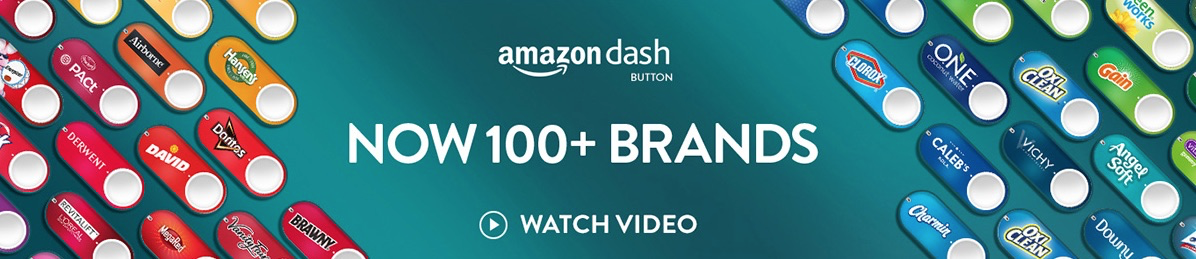
Remember the Dash Buttons mentioned a year ago?It seems they’ve been working out well as Amazon has greatly expanded the variety of products you can now order with just the touch of a button. You can learn more about the button expansion for Tech Crunch.


Smartphone Controlled Robot

The company Sphero has created robots which you can control with your smartphone. For the Star Wars fans there is a BB8 version, however you also have other options. Read more about it from BGR.


Nintendo, SF Public Library and Game Design

Nintendo recently worked with the San Francisco Public Library on an event that helps kids learn about game design using the Nintendo game Super Mario Maker. Read all about the program from The Verge.


Smart Water Pitcher


Do you forget to replace your water pitcher filters? Now you won’t! A new Brita water pitcher has been added to the internet of things and automatically orders new water filters when the filter needs to be replaced. Read more about it from The Next Web.


3D Printed Maps for the blind

The Hasso Plattner Institute has created Linespace a “tactile display system for blind users.” It works by combining voice commands with a camera tracking system and 3D printer extruder. You can read more about it from Make and you can watch it in action below!  


Wednesday, February 24, 2016

January 2016


NYPL Digital Collections


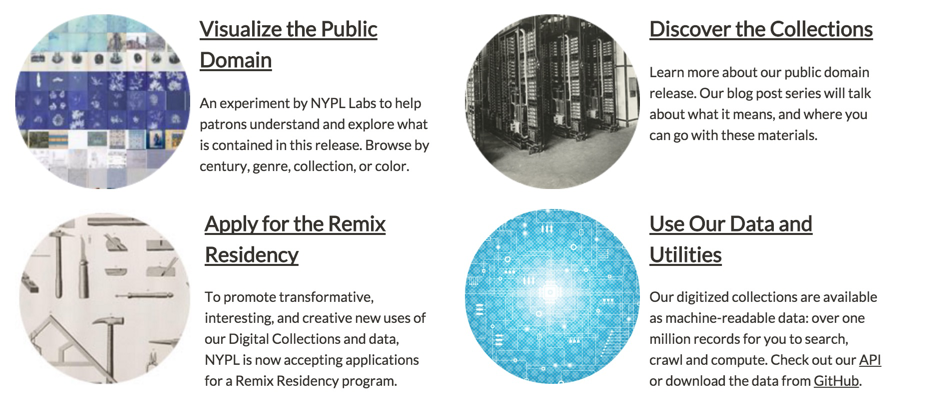
The New York Public Library has enhanced the sharing features for items in their digital collections that are part of the public domain. One can now download public domain items in high resolution without first seeking permission. In their blog post they also shared projects that have been created using these public domain items, such as a “Mansion Builder” which uses floorplans from the Apartment Houses of the Metropolis Collection.


CES Highlights


The Consumer Electronics Show (CES) was held in Las Vegas in early January. From drones, to the internet of things, to retro items like turntables there was a lot to see. For look at some of the show’s highlights check out this article from WIRED or this article from Gizmodo.


Google’s AI

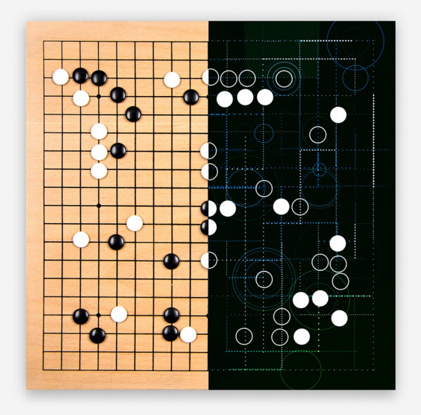
Google’s artificial intelligence made headlines at the end of January when it was able to beat the top European player of the game Go. The program AlphaGo, was created by DeepMind, and used “general machine learning techniques” to learn the game. A match between AlphaGo and Lee Sedol of South Korea is set for March. You can read more about it from WIRED.


Just for fun - Google Street View


Google street view has explored new places once again. Miniature cameras traversed the model street of Minatur Wunderland in Hamburg, Germany, the world’s largest model railway. Read more about it from Google’s blog or you can check out Minatur Wunderland here.


Wednesday, January 20, 2016

December 2015

Free the Law


Harvard is currently working on the digitization of US court decisions in conjunction with Ravel Law. The grant funded project began in 2015 and is slated to be completed in early 2017. You can learn more about it from Library Journal.


Robots with a Sense of Touch


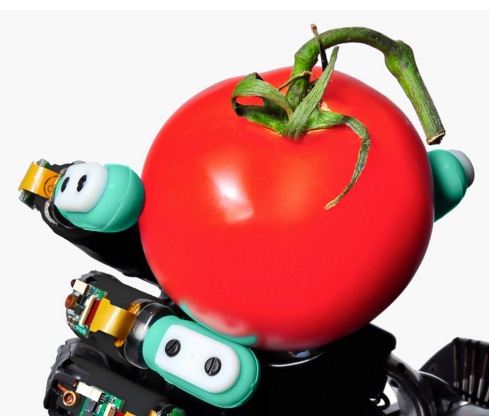
Robots have been used for a variety of tasks, but with a new technology called SynTouch they might also be able to sense texture. In addition to the potential for application in prosthetic technology, having robots that can touch could allow for the creation of texture standards. There are standards for things like color that ensure quality and consistency, however, feeling texture has always been somewhat subjective. You can read more about it from Wired.


Gene Editing Technology


You might have heard some buzz about the gene editing technology known as CRISPR. This new tech could be used for curing certain diseases, but also brings up topics like eugenics. A summit in Washington DC focused on the implications and future of gene editing took place this past December. You can read more about how this technology could be applied from The Atlantic.


Retro Gaming


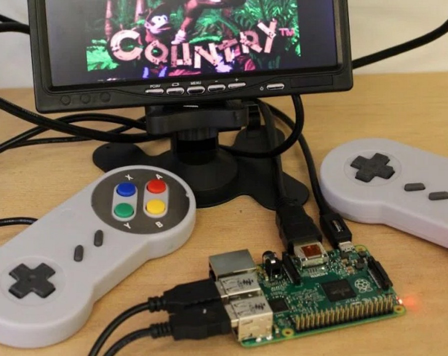
Last month, you took a look at the $5 computer from Raspberry Pi. Instructions are now available online to turn that computer (or any of the Raspberry Pi computers) into a gaming console. You can check it out at Make: Projects.


Smart Socks


Yes, you read that correctly. Netflix recently released instructions for creating socks that can sense if you’ve fallen asleep while bingeing your new favorite show, and pauses the show accordingly so you can pick it right up where you dozed off. Read more about it from The Verge.


Monday, December 14, 2015

November 2015

Google Cardboard


You might have heard of Google Cardboard, but what exactly is it? Essentially it’s a cardboard box that turns your smartphone into a virtual reality headset. You can purchase them, or make your own with instructions from Google. Many companies, such as the New York Times are creating their own VR content that you can view using this tool. Read more about it from Wired.


Architecture of Radio


Curious as to what all of those wireless signals around you would look like if you could see them? Now there’s an app for that! While it is $2.99 and is only available for iOS (Android is coming in 2016) it provides an interesting look at the world which you normally cannot see. Read more about it from The Verge.


3D Audio Technology


Working with a project called Cities Unlocked Microsoft has developed a type of 3D audio technology that helps the visually impaired navigate through cities. A reporter for the Telegraph tried out the technology first-hand which you can read about here. Though it is still very much in the testing phase it will hopefully allow those who use it in the future a greater sense of independence. You can also lean more about the project from The Next Web.


Spencer the Robot


If you happen to find yourself in Amsterdam’s Schiphol Airport in the spring you might come across Spencer a friendly robot developed by the KLM airline to help passengers navigate through the airport so that they don’t miss their flights. You can read more about the robot here.


PI ZERO

The Raspberry Pi Foundation, which recently merged with the group Code Club, has released a $5 computer known as PI ZERO. Interest for making such a low cost device was spurred from the reality that cost can be a barrier for those interested in learning code. The co-founder talks a little bit about the computer in this video and you can read more about it from Tech Cruch.


Thursday, November 5, 2015

October 2015

User Research Center at Harvard Library
At the end of the summer the Harvard Library opened its new User Research Center (URC) which will help to consolidate usability testing across their libraries and allow the library to make evidence based decisions. Their first project was an assessment of a selection of LibGuide. The new center houses devices that track screens and eye movement, among other things and you can read more about it from Library Journal.


Augmented Reality

So you might have heard about augmented reality, but what exactly are companies doing with it? Tech Insider gives ten examples of how augmented reality is being developed by different companies from teaching medical students, to allowing children to draw 3D figures. See all of the examples here.


Facebook’s “On This Day”

Many of you may have seen or used Facebook’s “on this day” feature, which allows you to see what you posted or what others posted to your Facebook in years past. This can be a cool feature, however, in instances where there is something that you might want to forget, up until recently there was no way to hide these memories. Facebook has recently changed that and you can learn more about it here.


Using WiFi and Sensors to Recognize People Through Walls


Researchers at MIT have developed a tool called RF-Capture that allows them to recognize people through walls. While this might seem a bit creepy it could potentially be used in smart homes in the future. You can read more about it from the Verge.


Self Lacing Shoes:

Despite the fact that Back to the Future day is now in the past without things like flying cars and the Cubs winning the World Series, Nike has succeeded in the creation of self-lacing shoes. Check them out on CNet.


3D Printed Prosthetic Hand

Using the 3D printer at the Wilmington Public Library in Delaware a 10 year old boy was able to create (with his Mom’s help) his own prosthetic hand. You can learn more about it from ABC Action News.

Wednesday, October 14, 2015

September 2015

Apple Event:


Apple hosted an event on September 7 during which they released the newest version of the iPhone, as well as an updated version of iOS, the iPad pro, a new Apple TV (with Apple Pencil), and updated Apple Watch models. To learn a bit more about the products check out this article from The Next Web. For more details about what you can do with the iPhone 6s/6s Plus check out this article from The Verge.


Google Photos and Chromecast:


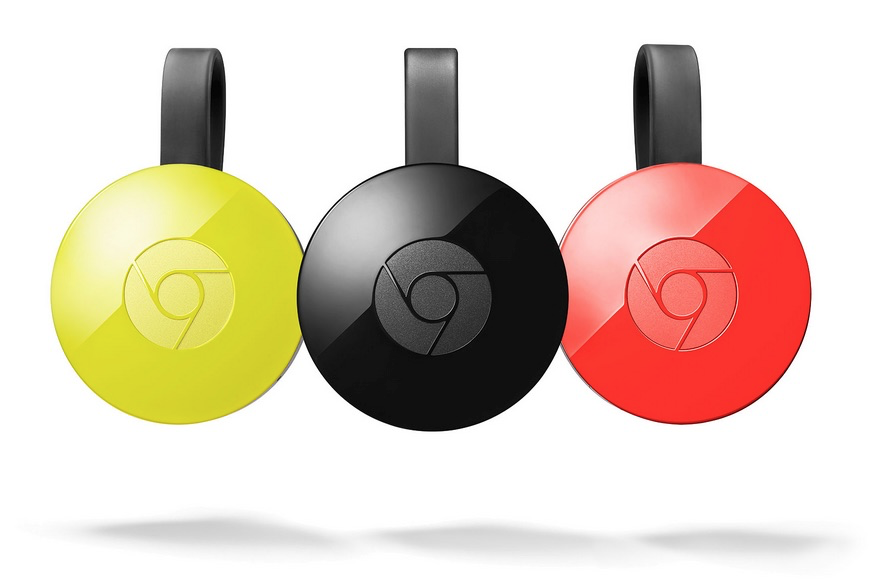
Google added some additional features to Google Photos (its online photo storage tool) last month. These features include the ability to share albums, label people in your photos so that you can more easily find them, and support for photos through Google’s Chromecast. Read more about it from CNet. Chromecast  (Google’s streaming media device) was also redesigned and showcased during the event. Features include a new look, as well as updated software. You can also read more about it from CNet.


Energy from the air:

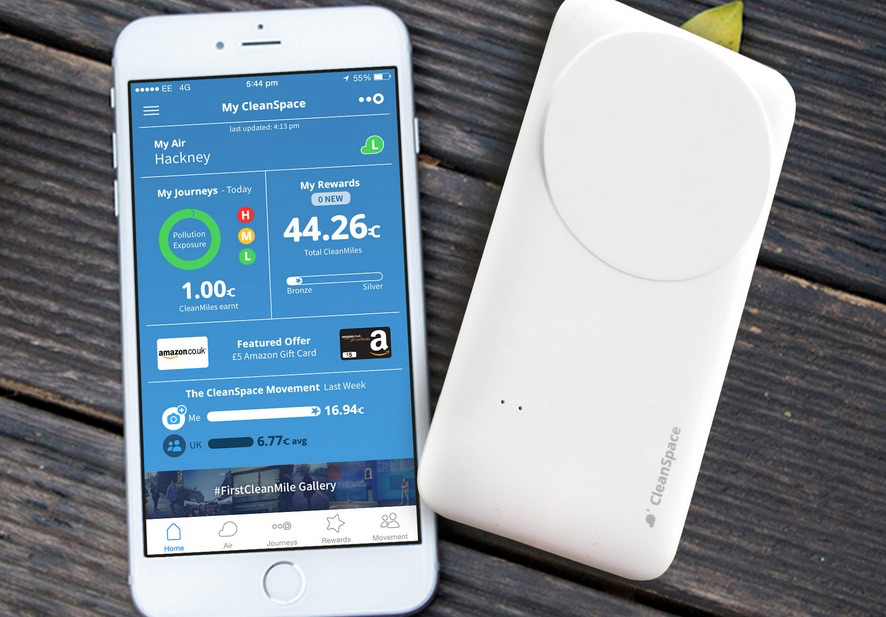
The British company Drayson Technologies unveiled a small device called Freevolt that harvests radio waves from the air and turns them into power for electronic devices. You can read more about it from CNet.


3D Human Body Modeling:


The company BioDigital has released their API to the public which will allow a multitude of groups to utilize the 3D body imaging tool for new endeavors. Organizations such as the National Institute of Health are already using the tool. You can read more about it from TechCrunch.


Paralyzed man walks without exoskeleton:

At the University of California, Irvine researchers have developed a method for transferring the electrical activity of the brain to a paraplegic patient’s limbs without the use of an exoskeleton. The technique was recently used to help a patient with paralyzed legs walk.  Read more about it from Cnet.

Logitech Security Camera:

If you’re on the market for a home security camera, Logitech tossed its hat in the ring of options. The small camera, called Circle, allows for streaming of video to your phone (both Apple and Android), and provides highlights of the day for times when motion is detected among other features. To learn about all this camera can do check out this article from The Verge.